A bocce scoreboard is a stand- or wall-mounted board that tracks the running point total for each team up to 12, 15, or 21 points. Permanent mounted scoreboards built for courts run around $260 and use sliding peg indicators that hold up outdoors for years. Portable tailgate-style scoreboards run $40 to $55 and double as a drink holder for backyard or park play.
Choosing the right one comes down to where you play and how often. The United States Bocce Federation publishes the official scoring rules American clubs play under, and those rules shape the form factor a useful scoreboard should take.
Key Takeaways
- A regulation bocce game is played to 12, 15, or 21 points, so any scoreboard you buy must count to at least 21 on each side.
- Permanent mounted scoreboards like The Ultimate Scoreboard cost around $260 and use weatherproof sliding indicators built to live outside year-round.
- Portable scoreboards run $40 to $55, include a drink holder, and stake into a lawn or clip onto a tailgate for park play.
- For tournaments, a paper Bocce Official Match Record Book costs under $15 and survives weather better than apps with a dying battery.
- Smartphone scoring apps work for casual one-on-ones, but the screen glare and dropped phone risk make a physical scoreboard the practical choice for league nights.
What a bocce scoreboard actually does
Only one team scores per frame in bocce. They earn one point for every ball closer to the pallino than the other team's closest ball, so frames usually score 1 to 4 points and games end at 12, 15, or 21. A scoreboard counts that running total for both teams in a way both teams can see between frames.
Without one, you are tracking the score in your head or on a phone. Tracking in your head fails after about three drinks. Tracking on a phone fails when the battery dies, the screen glares in the sun, or someone walks off with the phone. A purpose-built scoreboard removes the running argument over whether the score is 8 to 7 or 9 to 7.
Encyclopedia Britannica's entry on bocce traces the modern game to Italian and French courts in the 1700s, when scoring was kept by moving wooden pegs along a slotted board. The peg-and-slot design is still what most quality scoreboards use today.
The three types of bocce scoreboards
Permanent mounted scoreboards
These bolt to a fence, a backboard, or a dedicated post next to the court. They are sized to be readable from the far end of a 60- to 76-foot court, usually 24 inches wide or more. Indicators are sliding pegs or rotating panels, and the materials are chosen to survive sun, rain, and snow. Expect $200 to $300 for a quality unit. This is the form factor on most public and club courts, including venues catalogued by the Federazione Italiana Bocce.
Portable tailgate scoreboards
Compact stand-mounted boards with a small base or a screw-in lawn stake. Most include a drink holder built into the side. They run $30 to $60 and travel in a car trunk to parks, beaches, and tailgates. The board face is smaller, which suits casual play where everyone walks back to the end together to count.
Paper score books and tournament sheets
For league play, many directors prefer paper. A spiral-bound match record book or a stack of tournament score sheets is cheap, never runs out of battery, fits in a clipboard, and creates a paper trail of every game played. Paper is also what the USBF rules assume for tournament record-keeping.
What to look for when buying
Counts to 21. Some imported units only count to 15. If you ever play international rules or a long game, 15 is not enough. Buy a board that counts to 21 on each side.
Weatherproof materials. An outdoor scoreboard lives in sun and rain. Marine-grade plywood, coated metal frames, and UV-stable plastic indicators last a decade. Cardboard and unsealed pine warp in one summer.
Replaceable indicators. Sliding pegs get lost. Pick a model whose indicators are sold separately so you can replace one without buying the whole board.
Two-team visibility. Both teams need to read the score without crossing the court. The board should display each team's total clearly on its own side, ideally with a contrasting background.
Optional drink holder. Sounds frivolous. It is not. A built-in drink holder means players are not putting glasses on the court edge, which is how most chipped balls happen. Backyard court design coverage in outlets like The New York Times Real Estate section returns to this point: accessories that protect the equipment pay for themselves.
Our scoreboard picks for 2026
1. The Ultimate Scoreboard

Best for: backyard court owners and clubs who want a single board that lives on the court for the next ten years.
The flagship permanent-mount scoreboard. The face counts to 21 on both sides, the indicators are large enough to read from the back of a regulation 76-foot court, and the marine-grade construction has held up through full winters in the Northeast. At $260 it is the most expensive option here, and it is also the only one you will buy once. The Ultimate Scoreboard ships with hardware for fence or backboard mounting.
2. Extendable Measuring Device for Close Calls

Best for: backyard players who need to settle close frames before the points hit the scoreboard.
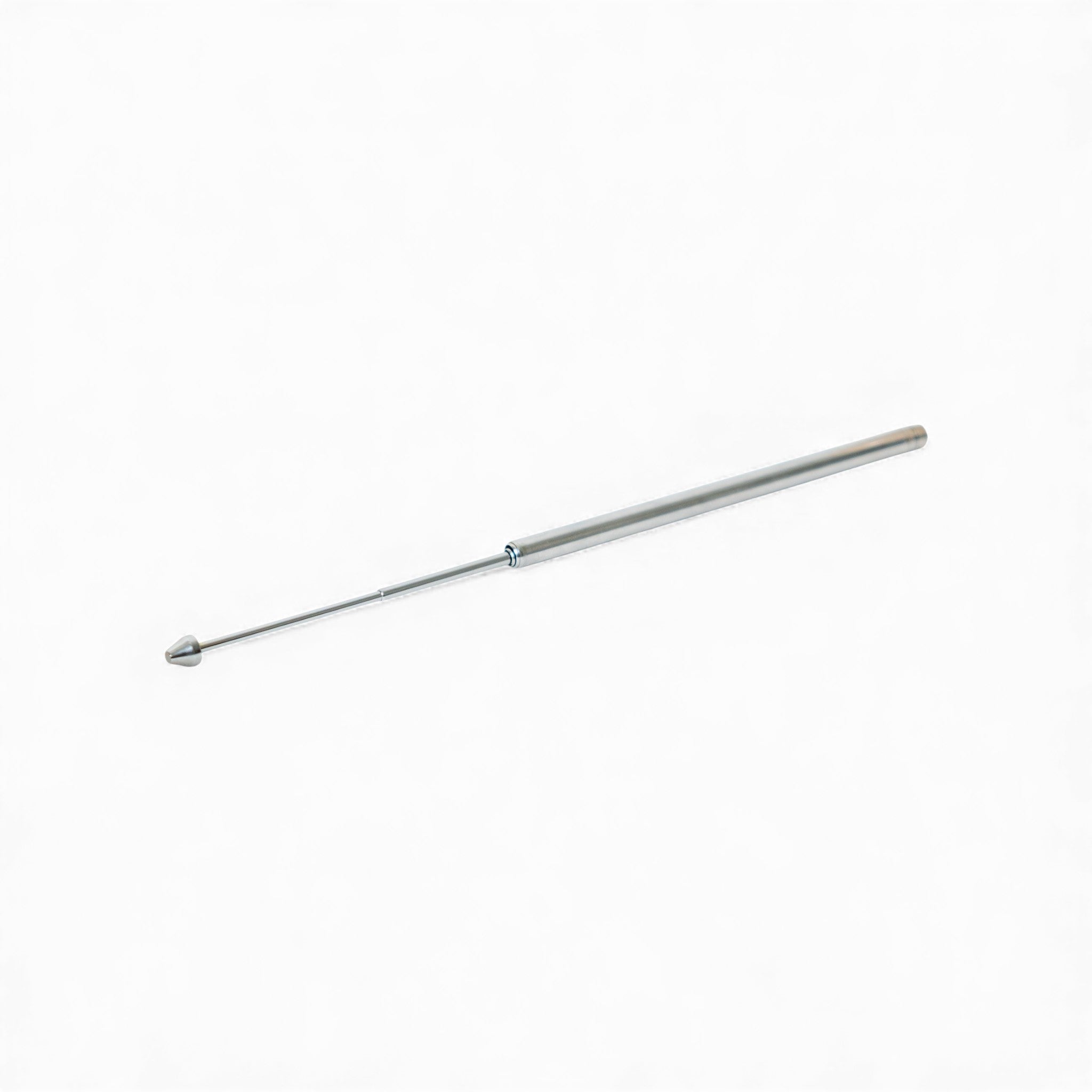
A scoreboard tracks the running point total, but each frame is decided at the pallino. The extendable measuring rod telescopes to about 60 cm and the notched head registers against the curve of a regulation 107mm ball, which keeps reads consistent frame to frame. At $20 it is the cheapest piece of league-grade scoring equipment and fits in any bocce bag pocket. Keep the Extendable Measuring Device in the same kit as the scoreboard.
3. Kestrel Measuring Device

Best for: league and tournament play where two close calls land in the same frame.
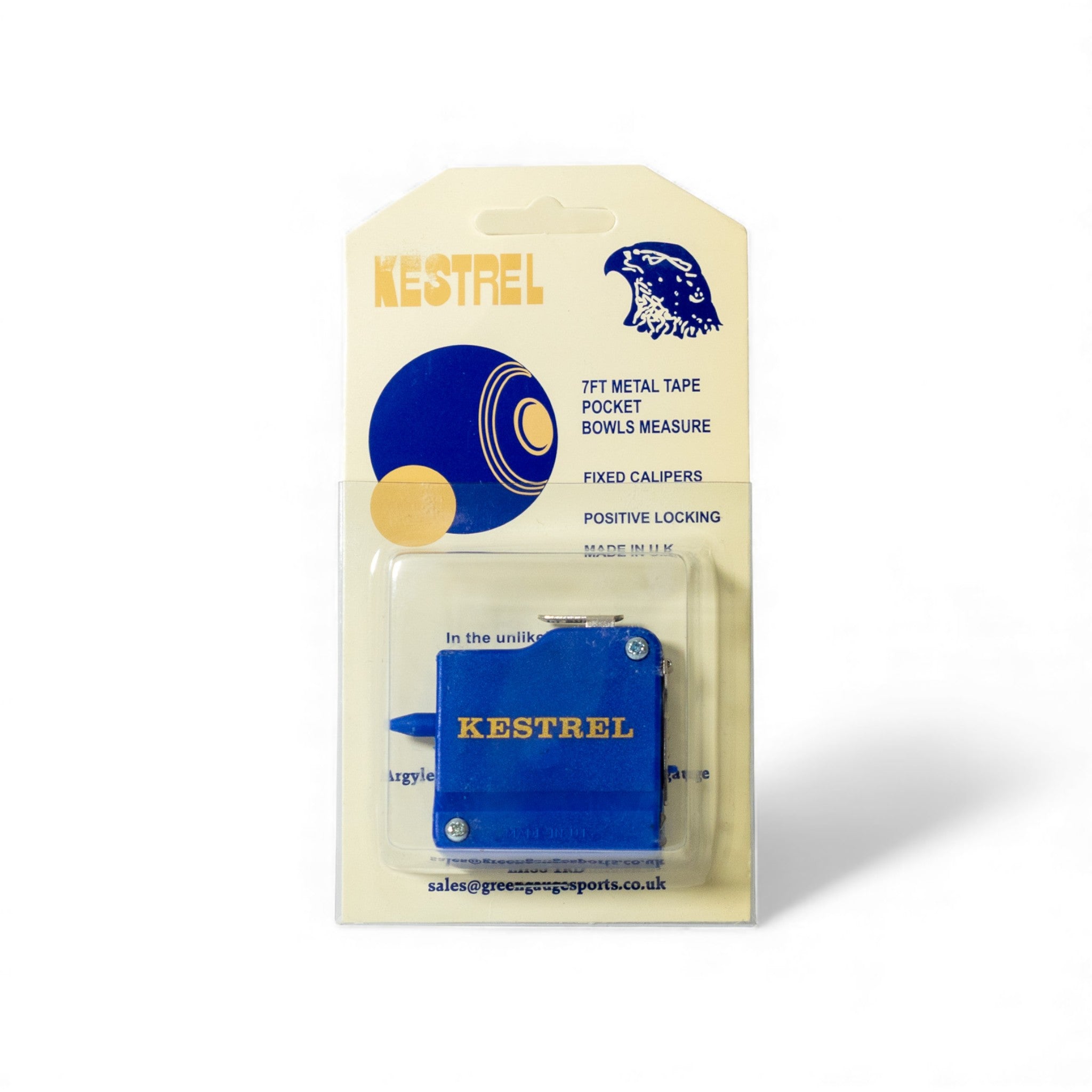
The Kestrel pivoting caliper is the tool you will see at most USBF-sanctioned tournaments. The two-arm pivot measures both contested balls without resetting, which speeds up scoring when a frame produces two close calls instead of one. At $40 it is the durable upgrade from the extendable rod and the right pick for clubs running league nights. See the Kestrel Measuring Device for the single-tool listing.
4. Bocce Official Match Record Book

Best for: tournament directors, league captains, and anyone running a multi-game format who needs a paper record.
The cheapest scoring tool here and the one most likely to outlast everything else. The spiral binding lays flat on a clipboard, the score grid fits regulation 12-, 15-, and 21-point games, and a notes column captures rule disputes and weather conditions. Under $15 and good for a full season of league play. Grab the Match Record Book as a backup even if you own a physical scoreboard.
What about smartphone scoring apps?
There are two or three free bocce scoring apps on the major app stores. They work. They are also the wrong tool for league night. The phone glares in the sun, drains in an hour of use, ends up in a pocket when someone walks to the bar for a refill, and is the single most-broken object on a court. Outdoor coverage in places like Outside Magazine has documented the same pattern across other sports: digital substitutes work for solo training, physical scoreboards win at group play. Use an app for a casual one-on-one. Use a physical scoreboard the moment a third person joins.
Why buy from BuyBocceBalls
BuyBocceBalls is a US specialty retailer focused entirely on bocce. We stock the full range of scoreboards (permanent and portable), replacement indicators, official match record books, and court signage in one catalog, and we ship from US warehouses to keep transit fast for backyard court setups on a weekend deadline. The scoreboards collection sits inside the broader accessories collection if you are bundling the scoreboard with bags, polish, and pallinos.
For background on what else a complete bocce setup needs, see our essential bocce accessories guide and the comparison of bocce court surfaces.
Frequently asked questions
How high does a bocce scoreboard need to count?
To 21 on each side. Most US club games are played to 12 or 15, but international and longer recreational games go to 21, and a board that caps at 15 will leave you with no way to track the last six points of a longer game. Buy one that counts to at least 21.
Are bocce scoreboards weatherproof?
The good ones are. Look for marine-grade plywood or sealed hardwood, coated metal frames or stainless hardware, and UV-stable plastic or anodized aluminum indicators. Avoid raw pine, cardboard, or unsealed MDF, which warp after one outdoor summer. Permanent mounted boards are designed to live outside; portable boards travel in a case.
Do you need a scoreboard to play bocce?
No. You can play bocce with eight balls, a pallino, and a flat surface. A scoreboard becomes useful the moment you play a game longer than four frames or with more than two players, because tracking the score in your head fails fast once people are talking. A $40 portable scoreboard pays for itself in avoided arguments after two evenings of play.
What is the standard size of a permanent bocce scoreboard?
Most permanent scoreboards are 24 to 30 inches wide and 12 to 18 inches tall, sized to be readable from the back of a 60- to 76-foot regulation court. The Ultimate Scoreboard is in the upper end of that range and uses high-contrast number panels for visibility in low light. Portable models are smaller (roughly 12 by 18 inches) because they are read from up close.
Can a portable bocce scoreboard handle league play?
For a small league with one or two courts, yes. The combo and single-drink-holder models from BuyBocceBalls have been used as the primary scoreboards at backyard leagues and tailgate events for years. For larger leagues with multiple simultaneous courts, the permanent mounted Ultimate Scoreboard is the standard, with a paper match record book backing it up.