The best bocce court surface for most North American backyards is a top dressing of crushed oyster shell over a stone-dust base, because it gives a fast, true roll, drains quickly after rain, and packs hard enough to read like a regulation court. Stone dust on its own is the budget pick, decomposed granite is the warm-weather alternative, clay is the traditional Italian choice, and artificial turf is the no-maintenance option for renters and small lots. Each surface has a real trade-off between price, roll quality, and yearly labor.
Surface choice is the single biggest variable in how a court actually plays. According to Encyclopedia Britannica's entry on bocce, the game has been refined on hard-packed earth for centuries, and the modern variations played in clubs across Italy, France, and the United States still hinge on how a ball reads off the playing surface.
Key Takeaways
- Crushed oyster shell over a stone-dust base is the closest backyard analog to a tournament-grade court used by USBF clubs.
- Stone dust alone is the cheapest playable surface at roughly $1 to $3 per square foot, but it compacts unevenly without a top dressing.
- Decomposed granite drains well in dry climates and reads slightly slower than oyster shell.
- Clay courts (the classic European choice) need daily rolling and watering, which makes them rare in home installs.
- Artificial turf removes 95% of maintenance but rolls slower than any natural surface; choose it for HOA constraints or rooftop installs.
The five surfaces serious players actually use
Most North American backyard and club courts fall into one of five categories: crushed oyster shell, stone dust (also called quarry dust or pack), decomposed granite, clay, or artificial turf. The Federazione Italiana Bocce (FIB), the sport's international governing body, certifies competition courts on hard-packed earth dressings, and most US club courts mirror that with stone-dust or oyster-shell builds.
Choosing between them comes down to three honest questions. How fast do you want the ball to roll? How much yearly upkeep are you willing to do? And what's the realistic budget for the initial build plus the dressing top-up every two or three years?

Crushed oyster shell (the gold standard)
Crushed oyster shell is the surface most US bocce clubs install when they can. The shells crush into flat, plate-like fragments that lock together under foot traffic and deliver a fast, true roll. Courts at long-established clubs (such as those listed in the United States Bocce Federation directory) frequently use a quarter-inch oyster-shell top dressing over a compacted stone-dust base.
Expect to pay about $4 to $7 per square foot for a turnkey oyster-shell installation, with the shell itself costing roughly $40 to $80 per cubic yard delivered (coastal regions are cheaper because the supply is local). A 90-foot by 13-foot regulation court takes about 4 to 6 cubic yards of shell for a proper top layer.
Maintenance is moderate. You drag-brush after every few sessions to redistribute the top layer, top-dress with fresh shell every two to three years, and weed-treat the borders twice a season. The pay-off is a court that reads close to FIB tournament conditions.
Stone dust and decomposed granite (budget builds)
Stone dust is the budget answer. A four-inch compacted stone-dust slab over a six-inch crushed-stone base costs roughly $1 to $3 per square foot installed, and it plays reasonably well for casual league nights once it's compacted. The downside is honest: without a finer top dressing, the surface develops shallow ruts where players stand to throw, and the roll slows as the dust binds with rain and dust.
Decomposed granite is the same idea with a different material. It compacts harder than stone dust, drains beautifully in arid climates, and develops a warmer reddish hue that many homeowners prefer aesthetically. The trade-off is that the roll feels slightly slower than oyster shell and the surface can powder in very dry weather, leaving a dust film on the balls.
If your budget will not stretch to oyster shell, a decomposed-granite build with a yearly top-up is the next-best playable surface for most US backyards. Coverage of backyard court projects in outlets like Outside Magazine regularly features DIY granite builds because the material is widely available at landscape-supply yards.
Clay courts (the traditional choice)
Clay is the classic European bocce surface and is the standard at many older courts in Italy, Croatia, and parts of South America. A clay court delivers a slow, heavy roll that rewards the soft underhand toss and gentle bank shots characteristic of raffa-style play.
Clay is also the highest-maintenance surface on this list. The court needs daily rolling with a heavy lawn roller, regular light watering to keep the surface from cracking, and a full re-screed once a season. Smithsonian Magazine has covered the parallel maintenance traditions at clay tennis facilities, and the labor profile is similar; many home builders rule clay out for that reason alone.
If you live in a humid climate (parts of the Northeast, the Gulf Coast, the Pacific Northwest), the natural rain rhythm does some of the watering work for you. In Arizona, Nevada, or Southern California, plan on running drip irrigation along the borders.
Artificial turf (the low-maintenance pick)
Engineered bocce turf is a short-pile, sand-infilled synthetic carpet laid over a compacted stone-dust base. It costs more upfront (often $8 to $12 per square foot installed) but removes nearly all of the dragging, brushing, and weed control that natural surfaces require. Rooftop courts, HOA-restricted communities, and any homeowner who travels a lot for weeks at a time tend to gravitate toward turf for this reason.
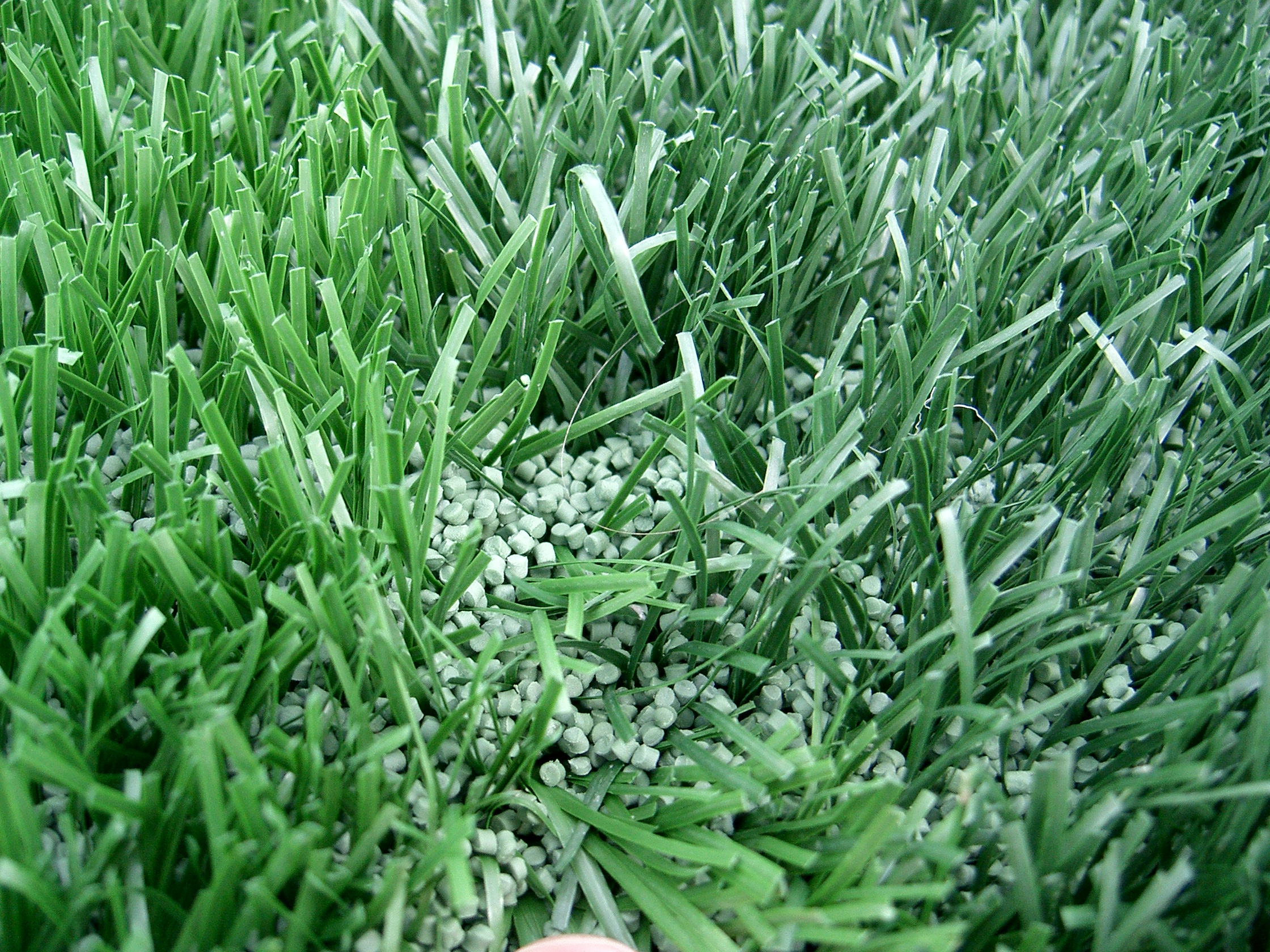
The honest negative is roll speed. Even the fastest bocce-spec turf reads slower than oyster shell, which changes how the ball banks and how shots break. Tournament players will notice immediately; casual players often do not.
Cost, roll, and yearly upkeep at a glance
Here is the practical summary across the five surfaces, based on going US landscape-supply prices in 2026.
- Crushed oyster shell: $4 to $7 per sq ft installed; fast true roll; moderate yearly upkeep.
- Stone dust: $1 to $3 per sq ft installed; medium roll, develops ruts; moderate upkeep.
- Decomposed granite: $2 to $4 per sq ft installed; slightly slow roll; light upkeep in dry climates.
- Clay: $3 to $6 per sq ft installed; slow heavy roll; high upkeep (daily during the season).
- Artificial turf: $8 to $12 per sq ft installed; slow consistent roll; very low upkeep.
If you are mid-build and still working out the box dimensions, our companion guide on bocce court dimensions walks through the FIB regulation (76 ft by 12 ft) and the common North American backyard sizes most homeowners use instead.
Tools that keep any surface playable
Whichever surface you choose, three pieces of court equipment keep it reading well. A wide lute or scarifier breaks up compaction and redistributes the top dressing. A long drag brush smooths the surface after sessions. A bocce-specific sweep handles edge debris without disturbing the playing area.
1. 48" Wide Court Lute/Scarifier

Best for: any oyster-shell, stone-dust, or decomposed-granite court that needs the top layer broken up and re-leveled.
A 48-inch lute lets you walk a regulation-width court in two passes. The scarifier teeth bite into the top half-inch of compacted dressing to lift the dust film that builds up after weeks of play, and the flat back smooths everything flush again. This is the single most-used grooming tool at most US club courts. See the full spec on the 48" Wide Court Lute/Scarifier page.
2. 6-Foot Stainless Steel Bristle Drag Brush

Best for: the post-session smoothing pass on any natural surface (oyster shell, stone dust, granite, clay).
This is the brush serious clubs use after league nights. The stainless bristles redistribute the top dressing without gouging, the six-foot working width covers a court fast, and the welded steel frame holds up to decades of dragging. It is an upgrade from homemade carpet drags and is the practical choice for any court that gets weekly play.
3. Aussie Clean Sweep

Best for: edge cleanup and leaf or debris removal on oyster-shell, granite, and stone-dust courts.
The Aussie Clean Sweep is engineered for Har-Tru-style tennis courts and adapts cleanly to bocce. The angled brush head sweeps leaves and grit off the playing area without lifting the dressing underneath, and the wheeled frame makes it light to walk end to end. It complements (rather than replaces) the drag brush above.
4. 14-Gallon Super Sopper

Best for: clay and oyster-shell courts in rainy climates where standing water delays play.
The Super Sopper is a roller that absorbs standing water from the court surface so you can play hours after a storm instead of days. It is the single piece of equipment most homeowners with clay or shell courts wish they had bought sooner.
Why buy from BuyBocceBalls
We sell complete court-grooming kits alongside our EPCO tournament balls, with US warehouses shipping the heavy items (lutes, drag brushes, sweeps, sopper rollers) by freight at predictable lead times. Our bocce court maintenance equipment collection bundles the tools clubs and serious backyard players actually use, and our team has helped install and maintain courts across more than thirty states.
If you are unsure which surface to commit to, we are happy to talk through your climate, lot size, and play frequency before you order materials. Email or call; we use this gear ourselves.
Frequently asked questions
What is the best surface for a backyard bocce court?
For most US backyards, the best surface is a quarter-inch crushed oyster shell top dressing over a four-inch compacted stone-dust base. It rolls fast and true, drains well, and reads close to a regulation tournament court. Decomposed granite is the next-best option in dry climates, and engineered bocce turf is the right choice if you cannot commit to yearly maintenance.
How much does a bocce court surface cost?
Installed surface costs in 2026 run roughly $1 to $3 per square foot for stone dust, $2 to $4 for decomposed granite, $3 to $6 for clay, $4 to $7 for crushed oyster shell, and $8 to $12 for artificial turf. A regulation 76 ft by 12 ft court takes about 912 square feet, so the surface alone runs anywhere from $900 to $11,000 depending on material.
Can you play bocce on grass?
Yes, casual backyard bocce works fine on a flat lawn, and family pickup play has been done on grass for generations. The ball rolls slowly and unpredictably, however, so grass is not used at any sanctioned tournament. If you want a roll that behaves the same way twice, build a proper surface.
How often do you have to top-dress a bocce court?
An oyster-shell or decomposed-granite court typically needs a fresh top-dressing every two to three years if it sees weekly play. A clay court is re-screeded once a season. Stone-dust courts hold their shape longer (four to six years) but develop ruts where players stand to throw, so spot-leveling with a lute is more common than full re-dressing.
Is artificial turf good for bocce?
Engineered bocce turf is good for low-maintenance and rooftop installs, but it rolls noticeably slower than oyster shell or granite, so serious players generally prefer a natural surface. Choose turf if you want a court you can ignore for months at a time; choose oyster shell if you want a court that reads like a tournament venue.