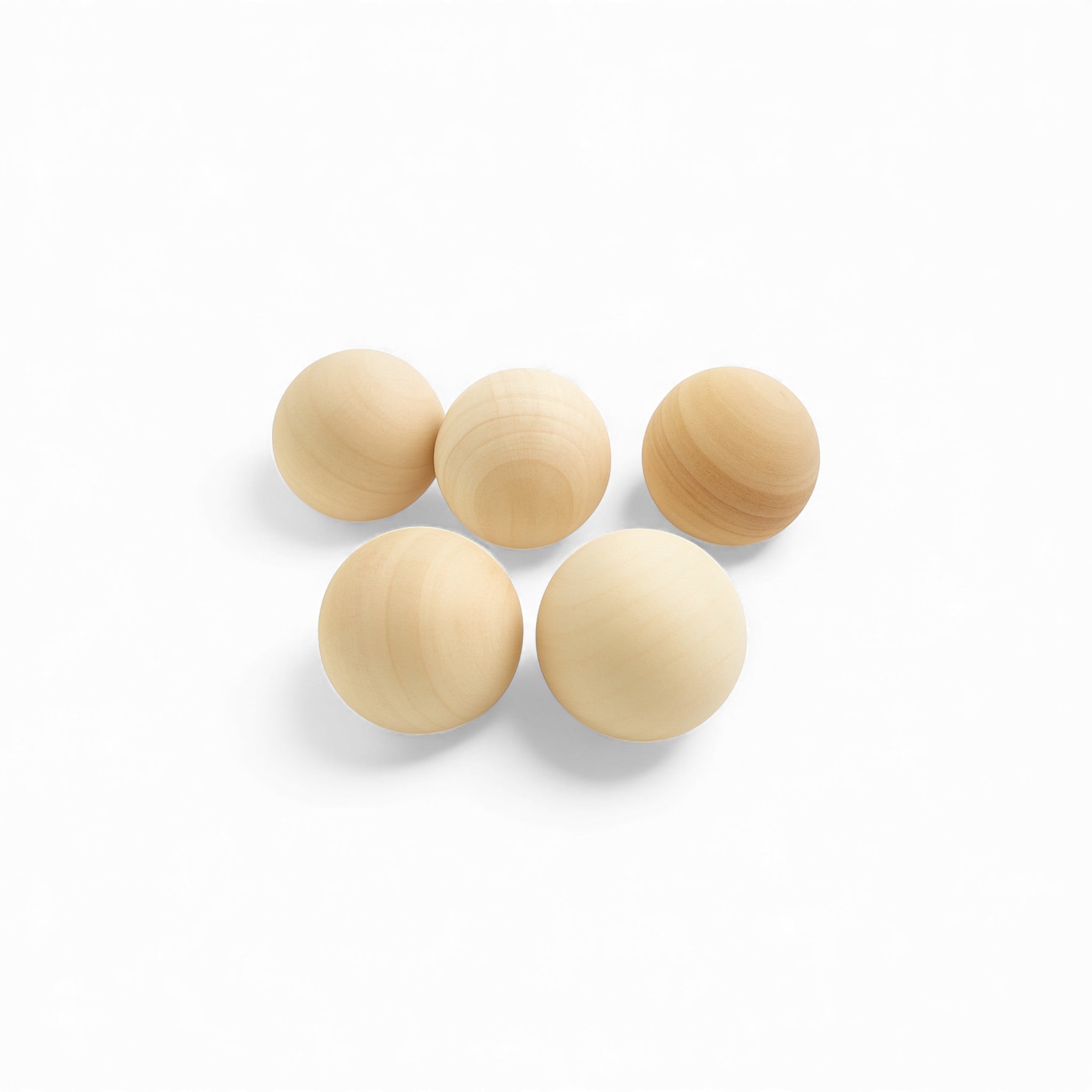
The same throw motion that lands a ball six inches from the pallino on grass will send it three feet past on packed clay. Surface changes the game more than most players expect, and adjusting to it separates casual players from players who win when they travel to a friend's court. Here's how the two surfaces actually play, and how to change your throw for each.
Key takeaways
- Clay plays faster than grass. The same throw rolls 20 to 25 percent further on packed clay.
- On grass, throw 15 to 25 percent harder than baseline. On clay, throw 15 to 20 percent softer.
- Grass has slight curve toward the mow direction. Clay holds its line.
- Under-throwing is the most common error on unfamiliar grass. Overshooting is the most common error on unfamiliar clay.
- Give yourself two calibration throws at the start of any session on a new surface.
Why the surfaces play so differently
Grass has depth. When a bocce ball rolls across a lawn, it flattens grass blades as it travels, and each flattened blade absorbs a tiny amount of energy. That absorption compounds over 60 feet of roll. A ball that leaves your hand with the same velocity as one on clay will lose 20 to 25 percent more energy by the time it reaches the pallino. Grass length matters too. A lawn cut to 2 inches plays significantly slower than the same lawn cut to 3/4 inch that morning.
Clay is a hard planar surface. Once compacted (which is what a Har-Tru or oyster-shell court is designed to be), it offers minimal roll resistance. A ball that leaves your hand at 4 mph on grass might land 3 feet from the pallino. The same throw on properly maintained clay will overshoot by 3 to 5 feet. The clay court also holds its line. Grass has microtexture that pulls balls slightly toward the mow direction, which clay does not. For a deeper look at surface materials themselves, see our Bocce Court Surface Materials Guide.
Side by side
| Grass | Packed clay | |
|---|---|---|
| Roll distance for same throw | Baseline | +20 to 25% |
| Consistency of roll | Variable (grass length, moisture) | High |
| Curve from surface texture | Slight, toward mow direction | None |
| Throw speed adjustment | 15 to 25% harder than baseline | 15 to 20% softer than baseline |
| Ball weight preference | Heavier (920 g regulation) | Any regulation weight |
| Where you'll play it | Backyard, park, casual | Bocce clubs, tournaments |
How to adjust your throw on grass
Add about 20 percent to your throw speed compared to what you'd use on a smooth surface. If you have a mental model calibrated to clay because you play in a league on packed surface, grass will feel like it's swallowing your throws for the first few frames. Under-throwing is the most common error on unfamiliar grass. Aim slightly deeper than the pallino for your first ball of a frame. It's much easier to correct short-throws on your remaining three balls than to correct long-throws that keep overshooting.
Grass length matters, and it's the one variable you can influence. If you play regular backyard bocce, mow the day before, not the day of. Freshly cut grass plays faster because the blades haven't recovered. Water the lawn lightly the evening before to firm the surface. Both are small differences individually but compound noticeably. For technique fundamentals that transfer across surfaces, see our Bocce Throw Techniques Guide.
How to adjust your throw on clay
Take about 15 percent off your throw speed. Clay is faster than most players expect on first exposure, and the biggest error is overshooting the pallino. On a well-maintained clay court, the ball will roll with almost the same velocity it left your hand with, decelerating gradually rather than braking hard against surface resistance.
The other clay adjustment is trust. Because clay holds its line, your first throw is much better information than on grass. If you overshoot the pallino by 4 feet, you know precisely how much less force to use on the next throw, and you can adjust with confidence. On grass, the same overshoot might have been caused by an unlucky patch of thin grass, and you can't tell.
Calibration ritual
Give yourself two calibration throws at the start of any session on a new surface. Don't count them; use them to reset your internal force model. Elite players do this without thinking; casual players skip it and burn their first frame recalibrating live.
Ball weight and surface
Regulation 920-gram bocce balls are the standard for both surfaces, and either weight works on either surface. That said, heavier balls fight through grass resistance better, and lighter recreational balls sometimes hop unpredictably on very hard-packed clay. If you're specifically buying for a grass yard, the EPCO 107 mm tournament set at full regulation weight is our recommendation. For a mixed-use backyard, the 110 mm 8-ball bundle handles both surfaces well at a lower price point.

EPCO 107 mm Tournament Set · $389 · Regulation 920 g. Best for grass buyers who want tournament-tier weight to fight through grass resistance.

110 mm 8-Ball Bundle · $273 · 780 g. Best for mixed-use backyards where grass and improvised clay both come into play.
Verdict by use case
If you're building a home court: packed clay if you have the budget and space (roughly $3,000 to $8,000 installed) and want tournament-consistent play. Grass if you have an existing lawn you want to use casually. The setup is free, and the game still works.
If you're joining a league: practice on the surface the league uses. Most US bocce leagues play on packed clay or oyster shell. Grass leagues exist but are less common. Ask before your first match.
If you play mixed surfaces regularly: pick the harder-to-master surface (grass) for most of your practice. Skills transfer more readily from grass to clay than the reverse. A player who is consistent on variable grass will be excellent on consistent clay. The reverse is not true.