In bocce, only one team scores per frame. That team earns 1 point for every ball they have closer to the pallino than the other team's nearest ball. The maximum score in any single frame is 4 points (all four of one team's balls closer than any of the other team's). Games typically run to 12, 15, or 21 points, chosen at the start of the match. The team that scores throws the pallino for the next frame.
The single-team-scores rule is what confuses most newcomers. In most other sports, both teams can score in a single round; bocce doesn't work that way. Each frame produces exactly one scoring team with 1, 2, 3, or 4 points, and the other team gets nothing for that frame. According to the United States Bocce Federation, this single-team-scores convention traces back to early-twentieth-century Italian codification and is universal across modern raffa rules.
Key Takeaways
- Only one team scores per frame; the other team gets zero, regardless of how close their balls were to the pallino.
- The scoring team gets 1 point for every ball closer to the pallino than the opposing team's nearest ball.
- Maximum frame score is 4 points (all 4 team balls closer than any opposing ball).
- Games run to a chosen target: 12 (short), 15 (recreational standard), or 21 (tournament-style).
- The team that scores throws the pallino for the next frame.
The single-team-scores rule explained
After all 8 balls in a frame have been rolled, look at the cluster around the pallino. Find the ball closest to the pallino. The team that owns that ball is the scoring team for this frame. Then count every additional ball from the scoring team that is closer than the opposing team's nearest ball. Each one is 1 point.
Example: Team A has the closest ball. Team A also has the third-closest ball. Team B's nearest ball is between them in distance, so Team B has the second-closest. Team A scores 1 point (only the closest ball counts; the third-closest is interrupted by Team B's nearest, which acts as a wall). The frame ends at 1 point for Team A.
Different example: Team A has the closest ball AND the second-closest AND the third-closest, with Team B's nearest in fourth place. Team A scores 3 points (three balls closer than Team B's nearest, uninterrupted).
According to Encyclopedia Britannica's entry on bocce, this point math is the defining mechanical innovation of modern raffa play and is one of the things that makes bocce score faster than lawn bowls (which has different scoring conventions).
The 4-point maximum
The hardest single-frame score in bocce is 4 points: all four of one team's balls closer to the pallino than any of the other team's balls. This is rare in competitive play but common in backyard play between mismatched teams. A 4-point frame swings a match dramatically, particularly in 12-point format where it represents one-third of the target score.
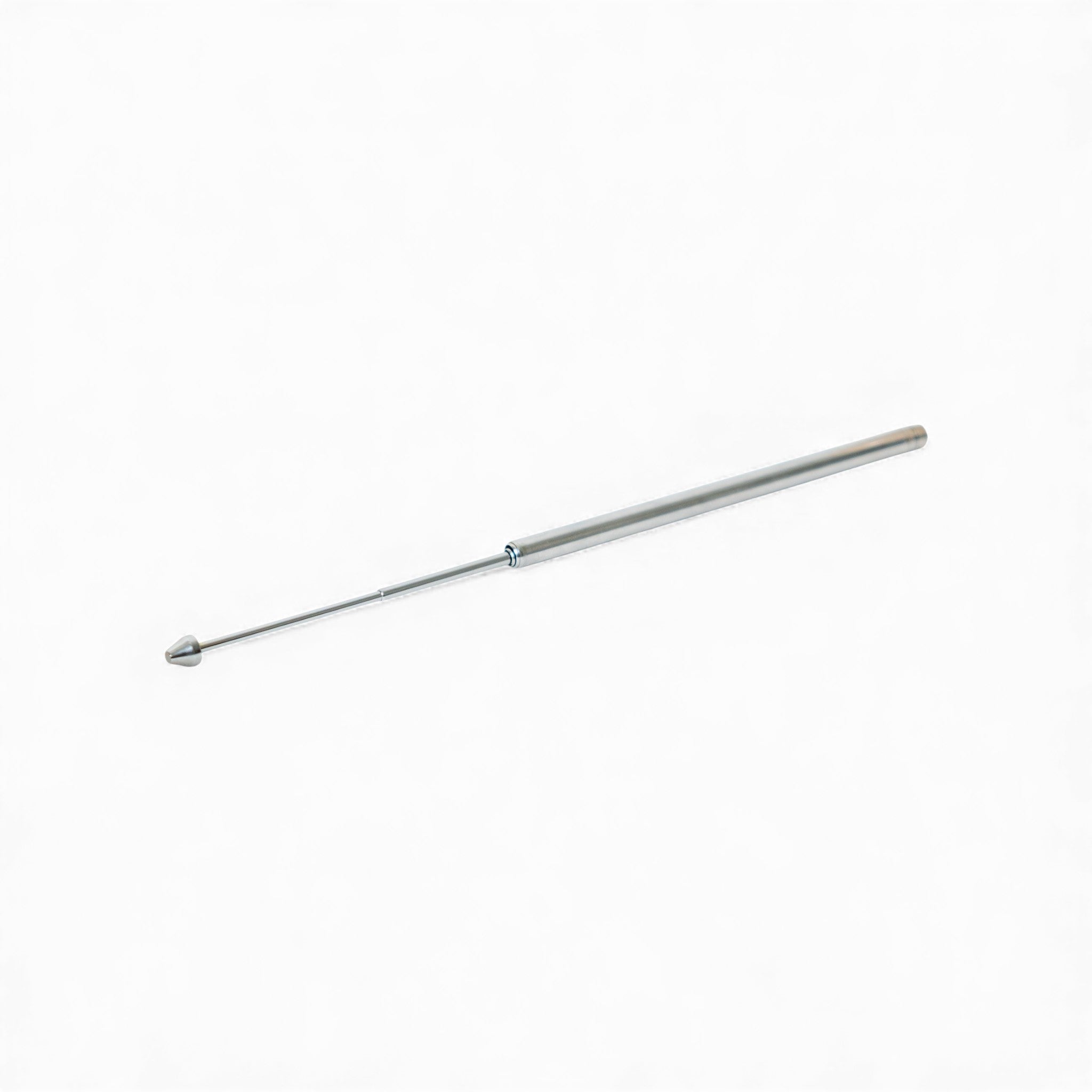
Tracking a 4-point frame requires confirming that all four balls of the scoring team are visibly closer than the nearest opposing ball. Use the Extendable Measuring Device for any cluster where the 4-point call is in dispute; coin flips and eye-ball estimates produce arguments at this scale of swing.
Target scores: 12, 15, or 21
Bocce games end when one team reaches the agreed target. Three target scores are common across rules variants:
12 points , the shortest standard game. Backyard casual play, family matches, and quick after-work matches. A 12-point game runs roughly 20-30 minutes. Suits beginners and time-constrained sessions.
15 points , the standard recreational target. Most league-night regular-season matches use 15. Runs roughly 30-45 minutes. The sweet spot for skill development without dragging.
21 points , tournament-format target. Used in Federazione Italiana Bocce sanctioned events and in USBF championship rounds. Runs 45-75 minutes depending on team skill and frame pace. Rewards consistency over single big-swing frames.
Choose one target at the start of the match and stick with it. The team that reaches the target first wins; play does not continue past the target except in some tournament tie-break formats. Coverage of competitive bocce in Outside Magazine has noted that the 12 vs 15 vs 21 choice is the single biggest match-pacing decision in casual play.
Equipment that supports clean scoring
1. Scoreboard

Best for: tracking running totals to 12, 15, or 21 without arguing about whose mental tally is right.
The Scoreboard at $260 counts to 21 on both sides, mounts on a fence or backboard, and reads cleanly from the throwing line. The single biggest scoring upgrade for serious backyard play: tracking the score in your head fails after the third match and on the second beer. Set up at the start of the day, leave in place all match.
2. Extendable Measuring Device

Best for: resolving close-call frames without arguments over which ball is actually closer.
The Extendable Measuring Device at $20 telescopes to 60cm with a notched head that registers against a regulation 107mm ball. Every match produces 3-5 close-call frames where the eye can't tell which team scored. The measuring device resolves these in 30 seconds. The lowest-cost equipment that meaningfully cleans up your scoring.
3. Bocce Rule Book: Official Open Rules

Best for: resolving the edge-case scoring questions that come up across a season of play.
The 15-dollar rule book covers the close-call resolution procedure, the order of priority when more than two balls cluster near the pallino, and the tie-break sequence. Useful for league players who want to handle disputes by citing written rules rather than personal interpretation.
Why buy from BuyBocceBalls
We carry the scoreboards, measuring devices, and rule books that round out a complete league-day scoring kit. Most US orders ship in two to four business days from US warehouses. Browse the full scoreboards collection for permanent-mount and portable options.
Frequently asked questions
Can both teams score in the same frame of bocce?
No. Only one team scores per frame. The team with the closest ball to the pallino is the scoring team. The other team scores zero for that frame, regardless of how many balls they had close to the pallino.
What is the maximum score in a single bocce frame?
4 points. This requires all four of one team's balls to be closer to the pallino than any of the other team's balls.
How many points do you play to in bocce?
Common targets are 12 (short backyard game, 20-30 minutes), 15 (standard recreational, 30-45 minutes), and 21 (tournament-style, 45-75 minutes). Choose one at the start of the match.
Who throws the pallino in the next frame?
The team that scored the previous frame throws the pallino for the next frame. This continues until one team reaches the target score.