My father-in-law was diagnosed with rheumatoid arthritis in his early sixties. He had played bocce with his brothers every summer since he was a kid, and one of the first things he asked his rheumatologist was whether he'd have to give it up. She said no. She said, actually, keep playing. Bocce turned out to be one of the few physical activities his hands and shoulders could still do comfortably, and it stayed part of his life for the next eighteen years.
The Arthritis Foundation classifies bocce as a low-impact activity suitable for most forms of arthritis, and the CDC's guidance on physical activity for arthritis specifically recommends low-impact recreation as part of managing the condition. But the general recommendation doesn't tell you which modifications actually help, or how to keep playing well as symptoms progress. That's what this guide covers.
Key takeaways
- Bocce is one of the few competitive activities that stays available as joint symptoms progress.
- The underhand throw motion is gentle on shoulders and elbows. The game is self-paced with real recovery time between throws.
- Switch to a 73 mm metal petanque set (680 g, smaller grip) when full-regulation 107 mm balls (920 g) become difficult.
- Shorten your court to 30 to 40 feet and use a firmer surface (packed clay) to reduce throwing force required.
- Seated throwing and ramp assist are legitimate modifications for players with progressed symptoms.
Why bocce works for arthritis in the first place
Three things about bocce make it unusually accessible for people managing joint pain. First, the throw motion is underhand and gentle, nothing like the shoulder torque of a tennis serve or the wrist snap of a bowling release. Second, the game is self-paced: you throw when you're ready, walk when you're ready, rest between frames when you need to. Third, the social element is real. Bocce is played in conversation, and conversation is a legitimate form of what physical therapists call rest-and-recover activity between throws.
What bocce doesn't do, and this matters, is put sustained load on any single joint. Compare to golf, which requires a shoulder rotation held under load through impact. Or gardening, which demands sustained crouching. Bocce distributes activity across walking, standing, and short controlled throws. For most arthritis sufferers, that pattern is much better tolerated than concentrated joint loading.
Ball choice matters more than usual
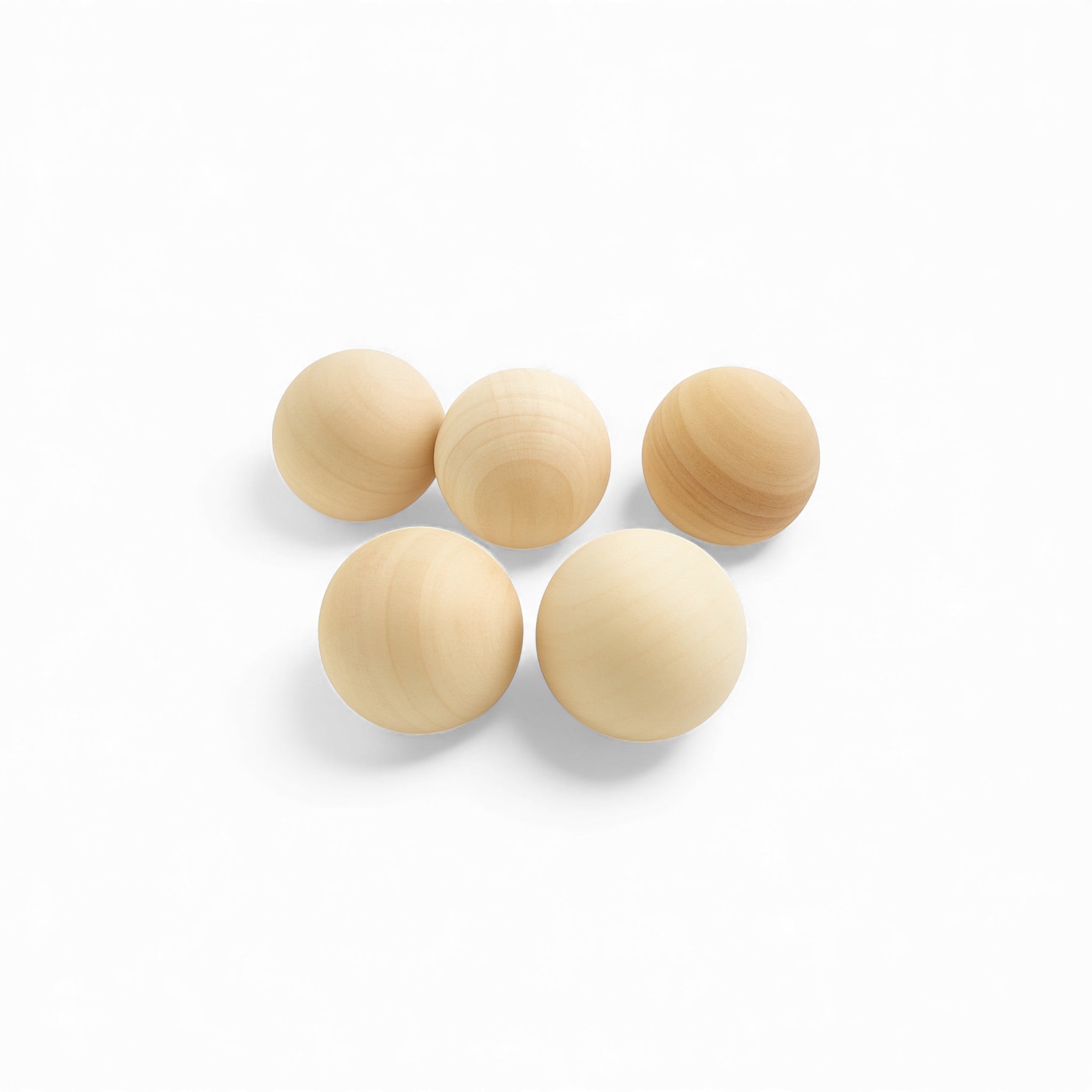
Full-regulation 107 mm bocce balls weigh 920 grams, about two pounds. That's manageable for someone with mild arthritis in the fingers or wrist, but it's the wrong choice if you're managing moderate-to-severe hand involvement. The 73 mm metal petanque set weighs about 680 grams per ball and fits smaller hands with less grip strength. My father-in-law switched to the 73 mm set in his late seventies and played comfortably for another decade.

Weight isn't the only variable. The ball's diameter affects grip mechanics. A 107 mm ball requires spanning your fingers about 4.2 inches; a 73 mm ball only 2.9 inches. If your finger extension is limited by joint stiffness, the smaller ball is meaningfully easier. Some players work in the middle at 110 mm, which is slightly larger than regulation but weighs less, at about 780 grams. That in-between size fits when you can still handle regulation diameter but want the lower total mass. For a full breakdown of size-by-need, see our Bocce Ball Size Guide.

Court modifications that help
If you're setting up a court at home for arthritis-friendly play, the two modifications that matter most are court length and surface firmness. Shortening from a 60-foot regulation court to something around 30 to 40 feet reduces the walking required per frame; you're covering end-to-end far less over an afternoon. Firmer surfaces (packed clay, oyster shell) require less throwing force to reach the pallino than soft grass, which reduces cumulative arm fatigue.
For visitors to your court, the modification barely affects the game. A 40-foot court still requires all the technique of a full-length court and rewards the same skills. This is worth mentioning because arthritis-adapted courts sometimes get treated as "kiddie bocce" by casual visitors, which they aren't. If you're building the court, our Backyard Bocce Court DIY Guide covers construction tradeoffs.
One thing your rheumatologist probably won't tell you
Warming your hands for 5 minutes before you start playing (run them under warm water, wear light gloves indoors before you head out, whatever works) reduces morning-stiffness pain during the first few throws by a lot. This isn't specific to bocce; it's general arthritis advice. But it applies here in a way that materially improves the game.
Modifications for progression
Arthritis progresses at different rates in different people. What worked at 60 may not work at 75. Two things tend to become useful as symptoms progress: seated throwing and ramp assist.
Seated throwing is exactly what it sounds like. You throw from a chair positioned behind the foul line rather than standing. In sanctioned play this is permitted for players with documented mobility issues. In casual play nobody minds. The throw motion is identical; you're just lower.
Ramp assist uses a purpose-built inclined ramp (the same equipment used in wheelchair bocce) to release the ball down a ramp rather than throw it by hand. This is a bigger step and changes the character of the game, but for players who want to keep playing when hand or shoulder function has significantly declined, it's a real option. Special Olympics and adaptive bocce programs use ramps regularly, and our Adaptive Bocce Guide covers the equipment options.
When to rest, when to play through
The Arthritis Foundation's general guidance is that activity producing pain lasting more than two hours after you stop is a signal that you overdid it. Applied to bocce: if the day after you play, your hands or shoulders feel worse than they would on a typical rest day, cut your next session shorter. Frames rather than games; games rather than tournaments. The goal is sustainable, and bocce rewards sustainability. It's not a sport you have to play maximally to enjoy.
One more thing worth naming: the mental benefit of continuing to play is real. Arthritis progression is often accompanied by a slow withdrawal from activities the person used to love, and each withdrawal compounds the sense of decline. Bocce is one of the sports that lets you keep showing up for far longer than most. That mattered to my father-in-law, and it matters to a lot of the customers we talk to.